The Rally Is Real. The Question Is What's Driving It.
Momentum, diplomacy, chips, and $8 gas. Here's how we're reading it — and what it means for your retirement account.
At approximately 8:50 this morning on CNBC's Squawk Box, retired General David Petraeus — former four-star Army commander, former CIA Director — was asked about the situation in the Persian Gulf. He described what's happening in the Strait of Hormuz as "a very complex blockade."
He doesn't use words carelessly. I noted it.
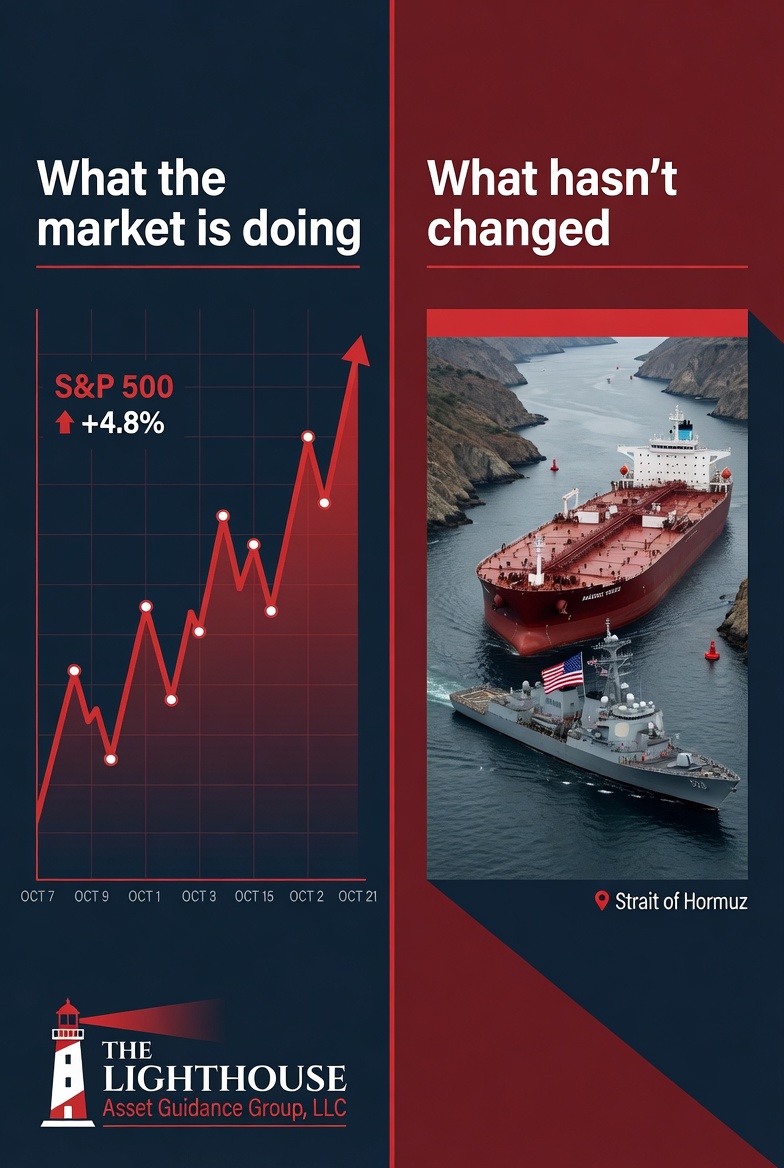
I'm leading with that because it sits in direct tension with something else that's true this morning: the market has staged a 10%+ rally over the past several weeks, chips and financials are showing real strength, and there are credible reports of diplomatic movement — the Trump administration speaking with Lebanon's leadership, signals that Iran may be feeling enough economic pressure to consider coming to the table.
Both things are true at the same time. A very complex blockade. And a market that smells a resolution.
This is the most interesting analytical moment we've had in months. So let me tell you exactly how I'm reading it.
What's Actually Driving This Rally
I want to be precise here, because the diagnosis matters.
This rally has the character of momentum and FOMO — fear of missing out. Not a fundamental re-rating. Not a broad confirmation that the underlying conditions have changed. Investors who were on the sidelines watching the market recover got nervous about being left behind, and money came off the bench. That dynamic is real, it can sustain a move for a while, and it doesn't require any actual improvement in fundamentals to continue — until it does.
Is there a diplomatic angle? Yes, and I'm taking it seriously. If the Hormuz situation resolves — if Iran comes to the table, if the blockade eases, if oil retreats toward $80 — that's a genuine fundamental shift that changes the calculus for the Fed, for inflation, and for consumer spending. I'm not dismissing that possibility. The market may be pricing in a scenario that actually materializes.
But here's the problem with trading retirement money on that thesis right now: the market is pricing in the possibility of resolution, not the confirmation of it. And the difference between those two things — in the Persian Gulf, with drone warfare, with a new supreme leader who called the Strait closure "a tool to pressure the enemy" — is not a rounding error. One headline reverses this entire move before the opening bell, with no time to respond.
What the Bulls Are Seeing (And They're Not Wrong)
Chips are staging something real. Financials are showing strength. AI compute infrastructure is attracting capital that isn't going anywhere regardless of what happens in the Gulf. These aren't noise — they're legitimate sector narratives with earnings support that's starting to come in.
Earnings season will tell the story. Early reads matter here. If revenues held through the tariff disruption, if margins didn't compress as badly as feared, if guidance comes in constructive — that's the fundamental confirmation that turns a momentum rally into something with legs. We're watching that closely.
So let me be direct: I am not a permabear. I don't think this rally is a trap by definition. I think it might be the beginning of a genuine step-up in risk assets, driven by real sector strength and a geopolitical situation that's moving toward resolution faster than the pessimists expected.
What I don't know — what nobody knows — is whether that resolution holds, and whether the confirmation from earnings is broad enough to justify the move that's already happened.
What the Fundamentals Still Say
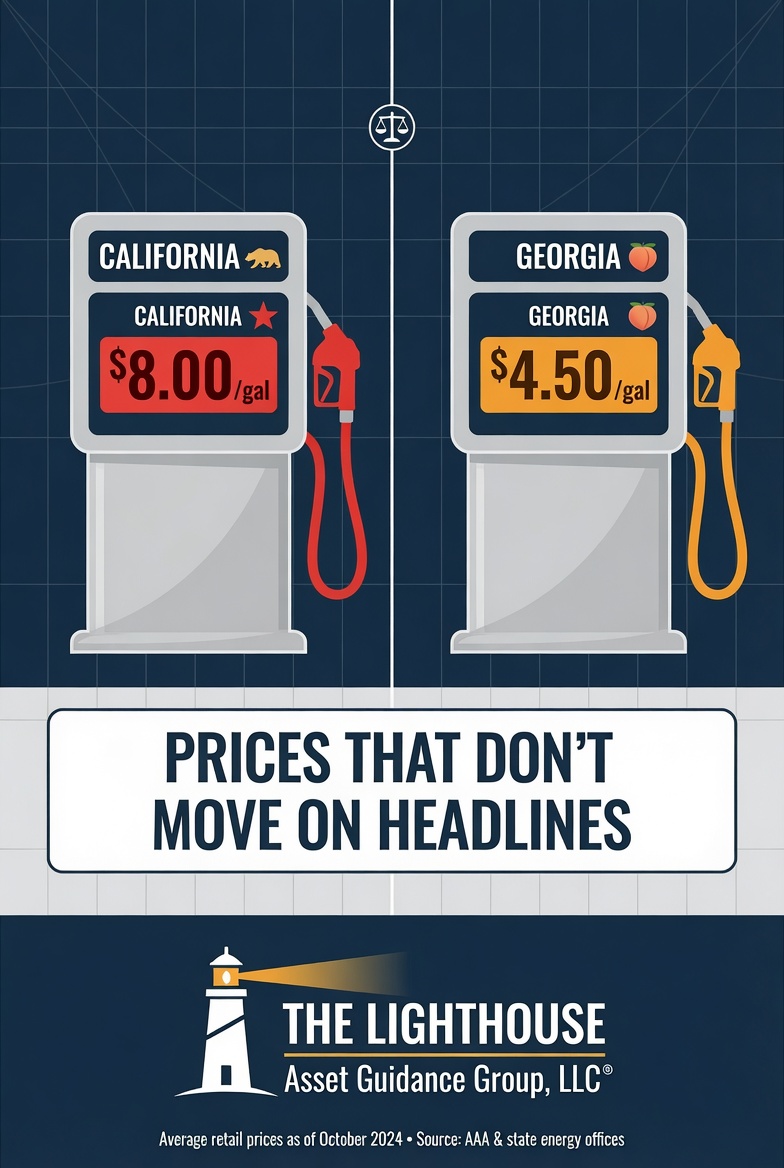
Here's what doesn't move on headlines.
Gas is $8 a gallon in California. In Georgia, where most of you are filling up, it's around $4.50. Those prices are a direct tax on every consumer in this country. They don't come down because of a diplomatic meeting. They come down when supply chains normalize, when the Strait actually reopens to commercial traffic, and when refinery capacity responds to lower crude prices — a process that takes months, not days.
The costs of goods that moved higher during the Iran War disruption are not going to reverse on a handshake. Freight costs, component costs, the price of anything that moves through a supply chain — these are sticky in a way that asset prices are not. The Fed knows this. That's why the dot plot from March still shows elevated rates for longer. Powell is watching the same data you are at the pump.
Earnings season has just started. We don't yet have a clear read on whether American companies absorbed the disruption gracefully or whether the margin pressure is showing up in the numbers. That picture will be meaningfully clearer in two to three weeks.
Until it is, the rally is trading on optimism. Optimism can be right. But it's not a retirement strategy.
What This Means for Your Retirement Account
Your retirement account didn't chase this rally. I want to explain why that's a considered position, not a missed opportunity.
Our system is built to respond to confirmed moves in market conditions — not to anticipate headlines that may or may not materialize. That design protects you when the headline turns out to be premature. It also means we don't lead the charge on moves that haven't been validated by fundamentals.
If peace breaks out — if earnings confirm broad resilience, if oil comes back, if the Fed gets room to move — our positioning will reflect that. The system reads conditions continuously throughout every trading day. It's not asleep. It's waiting for confirmation, not permission.
The fee you pay — 1% annually for accounts over $500,000, 1.45% below that — is for exactly this kind of discipline. A fiduciary who is legally obligated to put your interests first is not going to put your retirement assets on a diplomatic headline that a four-star general described, this morning, as "a very complex blockade." That's not timidity. That's the job.
The Other Half of the Equation
Now — if you want exposure to the chips rally, to the AI compute buildout, to the possibility of a Gulf resolution that sends energy names higher — that conversation exists. It just belongs in a different account.
For clients who want growth-oriented managed exposure, we offer GrowthVector — sized for capital that can afford asymmetric risk.
For active traders who want weekly signal ideas across equities, forex, and digital assets, we publish two separate services — both for your speculative trading account, never for your retirement portfolio.
PulseSignal Weekly fires selectively — built for high-conviction, high-movement environments. When conditions don't meet its standard, it publishes nothing. That silence is the system working, not failing.
RegimeSignal Weekly reads the current market environment first, then finds the setup appropriate for the moment. It adapts across the full market cycle — volatile or quiet.
Both publish Tuesday morning using Monday's close data. Both hold to an honest skip policy — no manufactured calls, no padding. Some weeks I publish one. Some weeks both. Some weeks neither. I go with what the evidence supports.
Neither is for your IRA. Your retirement is managed here too — just under a completely different mandate.
The Honest Read
Here's where I land on this market.
The rally has real components. Chips, financials, compute — those narratives aren't manufactured. The diplomatic signals around the Gulf are worth watching. If the next two to three weeks of earnings confirm resilience, and if the geopolitical situation actually resolves rather than just appearing to resolve, this rally has a foundation.
But we're not there yet. Gas is still $4.50 at the pump in Georgia. Costs of goods remain elevated. Earnings are early. And the Strait of Hormuz remains, as of this morning, a very complex blockade.
Your retirement account is positioned for what we know, not what we hope. If the picture changes — and it might — the system will reflect that. That's what continuous, rules-based management is for.
Take Action
If you're reading this in your email, the article's live on Substack with a ❤️ heart button and a comment section — neither shows up in the inbox. Click through if you want to weigh in on the rally thesis. I genuinely want to hear how readers are thinking about this one. You can also share this post with someone who's been watching the market and asking the same questions, or subscribe if this was forwarded to you.
If you want to talk through what this environment means for your specific account — whether the current positioning still fits, or whether GrowthVector or one of the signal services makes sense for a separate allocation — let's have that conversation. Reply here, reach us at [email protected], or schedule a review.
More on how we manage retirement portfolios: assetguidancegroup.com/ats-mgmt-landing-page-347034
───This post originally appeared on The Lighthouse on Substack — weekly financial analysis written specifically for people within ten years of retirement. Subscribe free at The Lighthouse on Substack or upgrade for weekly Trades of the Week picks.───
Investing involves risk, including the possible loss of principal. This article is for informational purposes only and does not constitute personalized investment advice. Past performance is not indicative of future results.
Wallace R Nichols, MBA, JD, CFP Chief Investment Officer Asset Guidance Group, LLC, a registered investment advisor