Follow the Money: Who's Paying for the AI Boom?
Follow the Money: Who's Paying for the AI Boom?
AI may change the world, but the bills still have to be paid, and the people paying them are getting pickier. (Part 2 of 3)
Yesterday I walked through how the AI trade went from a rally to a rout in two days. By Monday, the stock market had bounced back hard. The S&P 500 had its best day since April [CNBC, 2026-11-09].
So, crisis over? Not quite. Prices can recover in an afternoon. The deeper question takes longer to answer: who is paying for the AI buildout, and will they keep paying at the same pace?
That is today's topic. It matters for your retirement even if you have never bought a single AI stock.
What's Happening
A Chain of Promises
The AI boom runs on a chain of companies, each counting on the next one to pay.
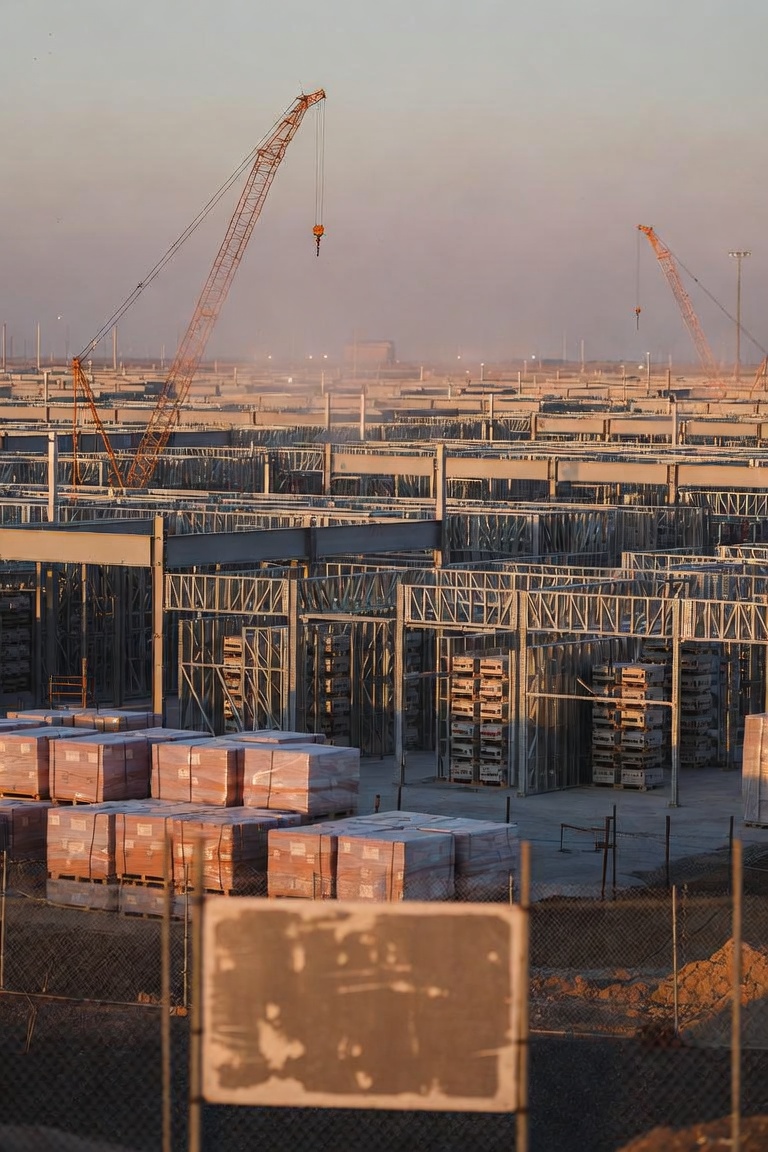
At one end are the AI developers, such as OpenAI, the maker of ChatGPT. They need enormous computing power. They rent it from builders such as Oracle and CoreWeave, which construct and run data centers. Those builders buy their chips from Nvidia, and they borrow heavily to do it.
The numbers are large. Oracle signed a contract with OpenAI reported at $300 billion over five years, starting in 2027. CoreWeave's contracts with OpenAI total up to $22.4 billion [Motley Fool via Nasdaq, 2026]. Nvidia has also invested directly in its own customers, including $30 billion in OpenAI this year and an additional $2 billion in CoreWeave [The Next Web, 2026-05-10; Bloomberg, 2026-01-26].
Critics call that "circular": the chipmaker funds customers who then buy its chips. Nvidia's answer is that its investments are a small slice of total AI spending, and that giants like Microsoft and Alphabet are spending heavily out of their own cash flow [Computing, 2026]. Both points are true. That's why the chain deserves watching rather than panic.
The Fuel Gauge: OpenAI's Latest Fundraising
OpenAI is growing fast, but it is not profitable. It covers its losses by raising new money from investors, and each round has come at a much higher price than the last. Its valuation went from $157 billion in October 2024 to $300 billion in March 2025, then $500 billion in October 2025 and $852 billion this past March [Reuters, 2025-10-02; Sharecast, 2026-03-31].
This fall, OpenAI set out to raise $30 billion at a $1.4 trillion valuation. Investors pushed back on the price, and the target fell to $1.25 trillion [Bloomberg, 2026-10-23]. Then some investors cut what they were willing to put in, and the round shrank to about $20 billion [Financial Times, 2026-11-03]. About $11 billion came in on Friday [Bloomberg, 2026-11-06].
Think of it like a fuel gauge. A $1.25 trillion price is still about 47% above March's. The value is still climbing, but more slowly, and with less money behind it.
Some market watchers compare this to the housing market in 2006. Home prices were still at records then. The trouble was that buyers had been counting on prices to keep rising quickly, and when the gains slowed, the math stopped working. The comparison has a real weakness, though. A struggling 2006 homeowner had no fast-growing income. OpenAI does: it reported $13.1 billion of revenue in 2025 and was running at about $2 billion a month by March [Sharecast, 2026-03-31]. It's a useful warning, not a verdict.
Lenders Are Getting Pickier
The same caution has reached the lenders. Reuters reported on Monday that banks and credit investors are looking harder at AI debt deals. Some banks that were lining up to fund AI projects a few weeks ago now say they are reluctant to lend more, even with guarantees from the industry's biggest names [Reuters, 2026-11-09].
That matters because the borrowing is still growing. Goldman Sachs projects that the largest cloud companies' debt issuance will reach $420 billion next year, up from an estimated $250 billion this year [Reuters, 2026-11-09].

What Does It Mean for Me?
Vital to the Economy Is Not the Same as Profitable for Shareholders
Credit analysts I follow closely compare the AI cloud builders to airlines, and the fit is striking. An empty airline seat is lost the moment the door closes. An hour of unused computing time is lost the same way. Most of an airline's costs are fixed, so profit depends on keeping planes full. The same is true of a data center packed with expensive chips. And the financing behind these chips was borrowed straight from the aircraft-leasing playbook.
Airlines are also a famous lesson in investing. Nobody doubts that air travel is vital to the economy. Yet airlines have often been a tough place for shareholders. AI could follow the same pattern: world-changing technology, with very uneven returns for the companies building it.
The Building Lasts. The Chips Don't.
There is a second wrinkle. A house bought in 2006 was still a house ten years later. A data center's building and power hookup will last for decades. But the chips inside behave more like jet engines: valuable, hard-working, and replaced on a much shorter cycle.
How short is a hot debate. The largest cloud companies spread the cost of their servers over about five to six years. Critics argue the useful life of AI chips is closer to two or three [Barchart, 2025]. Others point out that older chips keep earning money; CoreWeave has signed contracts for 2020-era chips that run into 2029 [Tom's Hardware, 2026]. Lenders are still working out how to price that risk, and their caution this week suggests they are pricing it more carefully.
Why This Reaches Your Account
You may not own OpenAI. It isn't publicly traded. But if you own an S&P 500 index fund, you own the companies at the other end of the chain. As we covered yesterday, the ten largest made up about 39% of the index at the end of September [S&P Dow Jones Indices, 2026-09-30]. And because the AI builders have become some of the biggest borrowers in the bond market, the story can reach the income side of a portfolio too.
That doesn't mean something will break. It means the AI boom's next chapter depends on money, not just technology. If you're within a few years of retirement, it pays to know where your exposure sits before the next headline tests it.
What We're Doing About It
Watching the Plumbing, Not Just the Price
Stock prices tell you what investors feel today. Financing conditions tell you what they can afford to do next. Both matter when we review how a client's portfolio fits their income needs and timeline. No approach avoids every decline, and losses are always possible.
Tomorrow, in Part 3, we'll look at the policy fight ahead, the scenarios worth watching, and what history says about which kind of market this might be.

Take Action
If this raised questions about where your own portfolio's AI exposure sits, in stocks or in bonds, let's talk. Reply to this email, call the office, or schedule a review here. For direct contact: [email protected].
───This post originally appeared on The Lighthouse on Substack — weekly financial analysis written specifically for people within ten years of retirement. Subscribe free at The Lighthouse on Substack or upgrade for weekly Trades of the Week picks.───
Investing involves risk, including the possible loss of principal. This article is for informational purposes only and does not constitute individualized investment advice. Past performance is not indicative of future results. Fixed income investments are subject to interest rate, credit, inflation, reinvestment, and liquidity risks. Equity investments are subject to market risk and may decline in value, sometimes significantly, over short or extended periods. Yields and market levels referenced are as of the dates indicated and change continuously.
Asset Guidance Group, LLC ("AGG") and its personnel may hold positions in securities or assets discussed, subject to AGG's personal-trading policy. AGG and its personnel do not undertake to disclose specific positions or to notify readers of position changes.
PulseSignal Weekly is AGG's impersonal research publication; subscribing to it does not establish an advisory relationship with AGG or provide individualized advice.
AGG is an investment adviser registered with the State of Georgia (CRD #291448). Registration does not imply a certain level of skill or training.
Wallace R. Nichols, MBA, JD, CFP® Chief Investment Officer Asset Guidance Group, LLC