$90 Oil and a Shrinking Economy
Last week, the markets handed us two gut punches at once. The combination has a name — and it’s one of the most difficult environments a retirement portfolio can face.
Wallace R Nichols MBA, JD, CFP
Mar 07, 2026
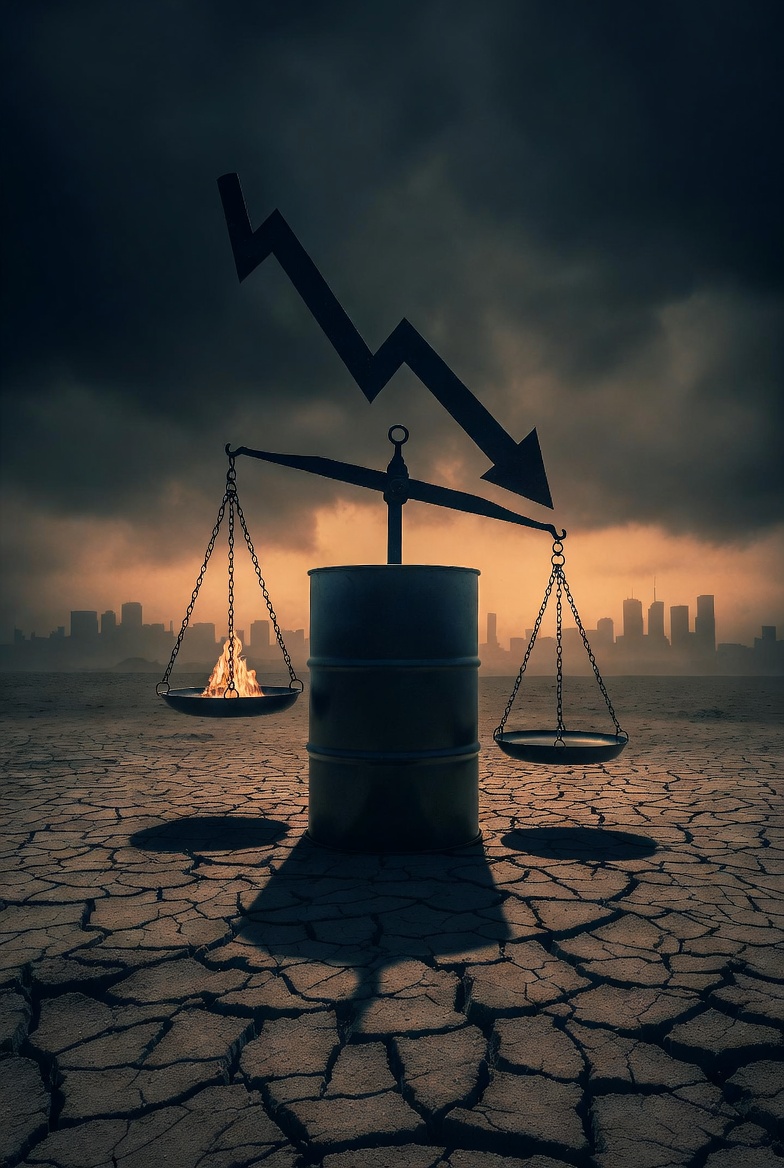
Yesterday, we talked about safe havens disappearing. Treasuries, gold, silver — all selling off alongside stocks in the same week that the U.S.-Israel campaign against Iran launched and a shock jobs report landed. When everything moves down together, the usual playbook stops working.
Today, we need to talk about what kind of economy that chaos may be announcing.

Because when you put $90 oil next to a -92,000 jobs number, you get something economists have a name for. And that name should be on every pre-retiree’s radar right now.
What Happened?
The February jobs report was bad. Not “disappointing” bad. Genuinely bad. The economy shed 92,000 jobs against a Wall Street expectation of a 50,000 gain. That’s a 142,000-job miss — one of the largest negative surprises in recent memory. The labor market had been the one pillar holding up the broader economic story. That pillar cracked last Friday.
At the same time, oil pushed toward $90 a barrel — fueled by the geopolitical shock of the prior week and genuine uncertainty about supply chains that run through one of the world’s most contested waterways. The price of energy doesn’t just affect what you pay at the pump. It runs through the entire economy: food transport, manufacturing, shipping, heating, utilities. Energy costs are a tax on everything, and right now that tax is going up.
Here’s the problem. Rising energy prices push inflation higher. A weakening job market signals the economy is slowing. Both things are happening simultaneously. That combination has a name:stagflation.
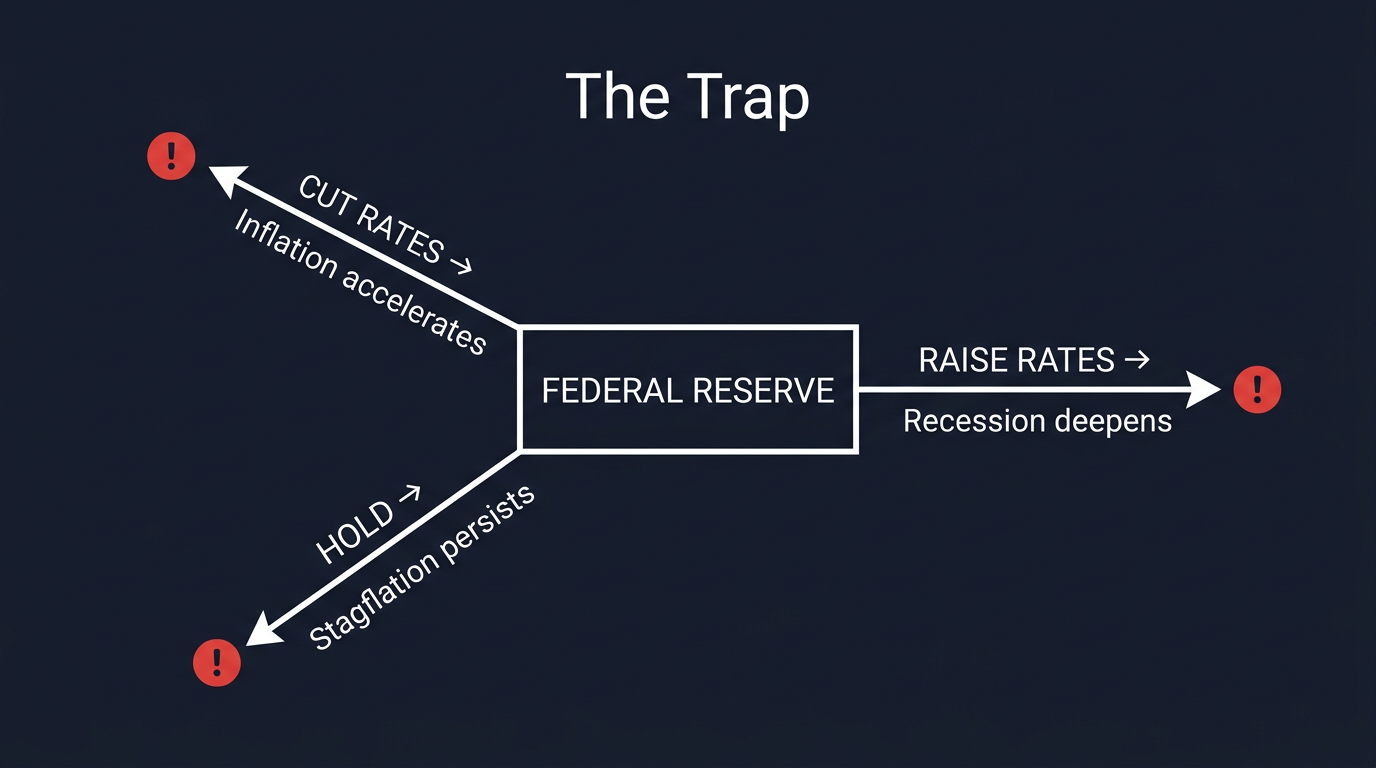
Stagflation means prices keep rising even as the economy contracts. It’s the worst of both worlds, and it puts the Federal Reserve in an impossible position. The Fed’s normal response to a weak economy is to cut interest rates — cheap money encourages borrowing, spending, and growth. But cutting rates when inflation is already elevated pours fuel on the fire. Rates stay high, the economy cracks more. Rates come down, inflation gets stickier. There’s no clean move on the board.
The last time the U.S. experienced sustained stagflation was the 1970s. It took years — and interest rates above 15% — to break it. We’re not predicting a repeat. But when the setup starts to rhyme, it deserves serious attention.
What Does This Mean for Me?
If you’re within ten years of retirement, stagflation hits you in two places at once — and that’s exactly why it’s the hardest environment for a retirement portfolio.
On one side, inflation erodes purchasing power. The things you’ll spend money on in retirement — healthcare, food, energy — get more expensive. Your dollar buys less. If your portfolio isn’t keeping up, you’re falling behind in real terms even if the account balance looks stable.
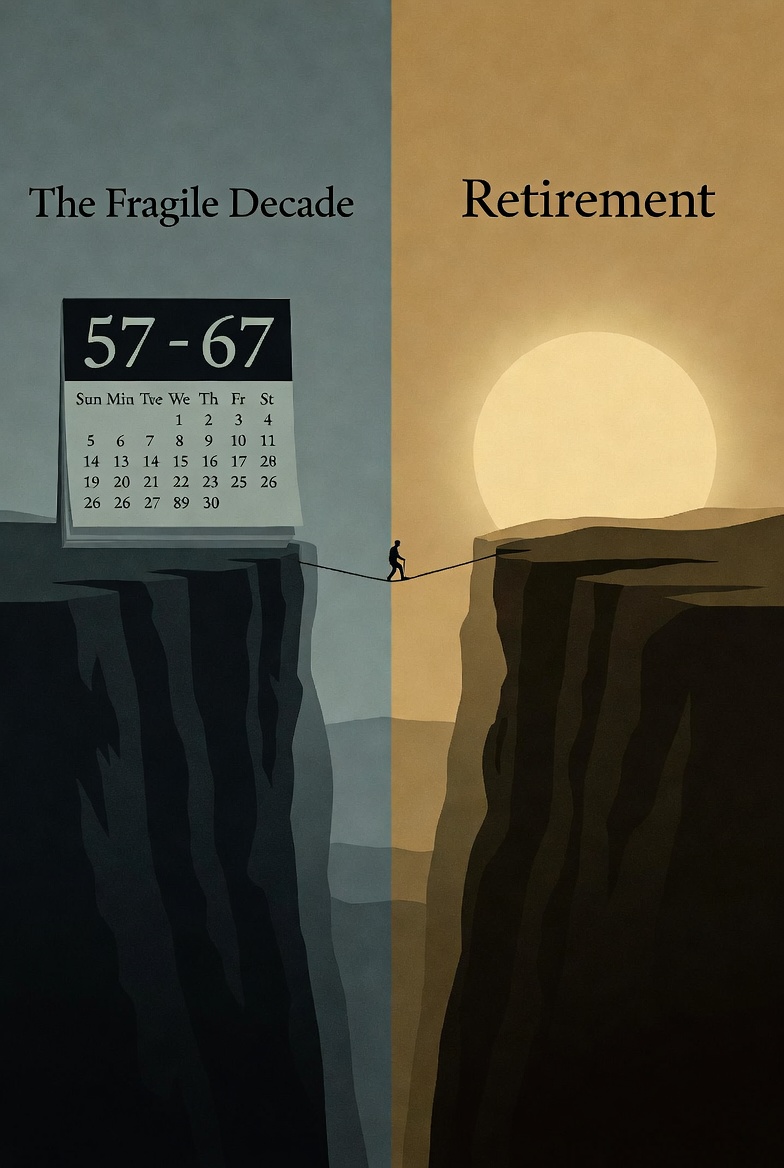
On the other side, a weak economy and the market volatility that comes with it threaten portfolio values right when you can least afford a drawdown. This is the sequence-of-returns problem we’ve written about before. A significant loss in the years immediately before or after retirement isn’t just painful — it can permanently impair your income in ways that good years later can’t fully fix. The math is unforgiving. A 50% loss requires a 100% gain just to break even, and if you’re withdrawing income during that recovery, the hole gets deeper, not shallower.
Stagflation is particularly brutal because it attacks both sides of the ledger simultaneously. Your cost of living rises while your portfolio faces headwinds. Neither the traditional “fight inflation” playbook nor the traditional “ride out a recession” playbook gives you clean protection. Bonds offer less shelter when inflation is elevated. Growth equities struggle when the economy is contracting. Even assets that once served as reliable hedges have been behaving unpredictably — as last week demonstrated.
The 1970s analogy is useful here not as a prediction but as a reminder of time. Stagflationary environments don’t resolve quickly. They don’t snap back like a V-shaped recovery. If the economic regime we may be entering persists for 18, 24, or 36 months, that’s not an abstraction. For someone at 62, that’s a significant portion of the fragile decade — the years where sequence-of-returns damage is most permanent and least recoverable.
That’s why the environment matters, and why “just stay the course” isn’t an adequate answer when the course itself is shifting.
What Are We Doing About It?
This is the part that actually matters to your portfolio — and it’s where I want to be direct about what makes our approach different.
Most investment systems are built to make a call and hold it. You set a target allocation, rebalance quarterly, and trust the long-run average to bail you out. That approach has real merit when the world is predictable and you have time on your side. It becomes a liability when the environment is shifting rapidly and the stakes are highest.

Our Automated Trading System doesn’t work that way. It doesn’t make a single defensive bet and wait for the smoke to clear. It monitors risk conditions throughout every trading day — re-evaluating whether the current positioning still reflects what the data actually shows. When conditions change, positioning changes. Not emotionally. Not reactively. According to the same tested criteria that drove the original decision.
This past week was a live demonstration of exactly that dynamic. Positioning moved as conditions evolved — not once, but multiple times — because the data that drove each decision wasn’t the same from day to day. That’s not whipsawing. That’s the system doing its job: matching the portfolio’s risk exposure to the actual risk environment, continuously, rather than anchoring to a call made when the world looked different.
I’ll be transparent about something that took me years to build into the design: the system is built to overrule my instincts when the evidence points the other way. That’s not false modesty. Any experienced investor has deeply held intuitions about where markets are headed. Some of those intuitions are right. Some are wrong. And in the heat of a volatile week — when fear and certainty both feel vivid — the instincts that are most confident are often the ones most worth questioning. The rules exist precisely for those moments.
What that means in practice: we’re not riding this out passively, and we’re not sitting on our hands waiting for certainty that won’t come. We’re managing the portfolio’s risk profile in close to real time, with criteria that were built and tested before this week happened, and that don’t bend to headlines or emotion.
The goal isn’t to predict whether stagflation fully materializes, or how the Fed threads the needle, or what oil does next month. Nobody knows those answers. The goal is to make sure that whatever happens, the portfolios we manage aren’t carrying more risk than the current environment justifies — and that when the picture clears, we’re positioned to participate in the recovery from a stronger base.

The Bottom Line
Here’s what I want you to take away from this week.
The economic setup that emerged from the week of March 2–6 is genuinely unusual. Two large shocks, moving in opposite directions on the economic dial, created a configuration that the standard playbooks weren’t built for. That doesn’t mean disaster is inevitable. It means the environment requires a different kind of attentiveness than calm markets do.
For people approaching retirement, the asymmetry of risk is the most important thing to understand. A year of strong performance is meaningful. A severe loss at the wrong time can undo years of compounding and permanently reduce what your portfolio can sustain as income. The fragile decade is called fragile for a reason. This isn’t pessimism — it’s math.
What we’ve built at AGG is designed specifically for moments like this. Not to predict the future, but to respond to the present — systematically, without flinching, and with the same discipline on a turbulent Thursday that it applies on a quiet Tuesday. That consistency, across conditions that nobody scheduled in advance, is what we believe good risk management actually looks like.
If any of this week’s events raised questions about how your own plan is built to handle an environment like this, that’s worth exploring. Not in the abstract — in your specific situation, with your timeline, your income needs, and your actual risk tolerance.
If you’re reading this in your email, the article looks great — but the Substack website is where the ❤️ heart icon lives, along with the comment section and the share options. Click through to the post, hit the heart, and leave a thought if something here resonated (or if you push back — we welcome both). You can alsoshare this post,share The Lighthouse publication, orsubscribeif someone forwarded this to you. It takes thirty seconds and it helps this reach someone who needs to see it.
Learn more about our approach →
Want to talk about how your portfolio is positioned for an environment like this? Reach out at [email protected] or book a time at assetguidancegroup.com/calendar.
Investing involves risk, including the possible loss of principal. This article is for informational purposes only and does not constitute personalized investment advice. Past performance is not indicative of future results.
Wallace R Nichols, MBA, JD, CFPChief Investment OfficerAsset Guidance Group, LLC, a registered investment advisor
───
This post originally appeared on The Lighthouse on Substack, where Wallace Nichols publishes 2-3 times per week on markets, the economy, and what it means for your money. Subscribe free to get every post delivered to your inbox — or upgrade to a paid subscription for our weekly "Trades of the Week" picks.
───